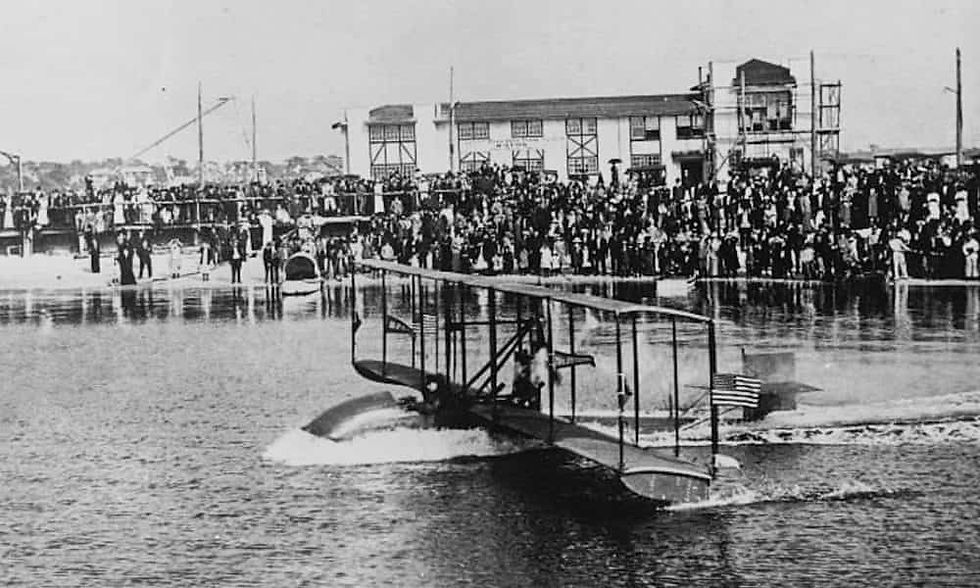
The Rise, Fall, and Rise Again of New Port Richey

By Joe Marzo

Long before anyone imagined movie stars strolling along its streets, the area that would become New Port Richey was defined by water, isolation, and slow, deliberate settlement.
The Pithlachascotee River was everything.
For early inhabitants, including Native American groups such as the Seminole, the river provided transportation, food, and access to the Gulf. This region was not a major population center, but it was part of a broader network of movement and survival that stretched across Florida’s west coast.
By the mid nineteenth century, after the Seminole Wars forced most Native populations southward or out of the region, settlers began moving into the area in greater numbers. These were not wealthy developers or visionaries. They were practical people looking for land they could work and a place they could carve out a life.
Through the late 1800s, the area was still loosely organized. Small settlements formed along the river and nearby coast. Families lived off fishing, citrus growing, cattle, and basic trade. Life was not easy. Transportation was limited, and the region remained somewhat cut off from the more developed parts of Florida.
What mattered was access.
The river connected settlers to the Gulf, and from there to broader trade routes. Boats moved goods in and out. Over time, this created the beginnings of a local economy. Stores, docks, and small businesses appeared, not because of speculation, but because people needed them.
Nearby communities like Tarpon Springs to the south were developing their own identities, particularly with the sponge industry, and that regional growth helped pull attention toward Pasco County.
Still, New Port Richey remained secondary. It was a place you lived, not a place you visited.
By the early twentieth century, things began to change.
Florida as a whole was starting to grow, and even relatively quiet places like New Port Richey began to feel the effects. Roads improved. Land ownership became more formalized. The town itself was officially incorporated in 1924, but the groundwork for that had been laid in the years leading up to it.
Promoters and early developers began to recognize something important.
This was a beautiful place.
The river, the proximity to the Gulf, and the undeveloped land meant that New Port Richey had something that could be sold. Not just to farmers or fishermen, but to outsiders. Northerners, investors, and eventually tourists.
This shift in perception is key.
Before the 1900s, the land had value because you could live on it. By the 1910s, the land had value because you could sell it.
Men like George R. Sims began to play a role in shaping the town’s future. Sims and others were not just settlers. They were planners. They saw the potential for a structured community rather than a scattered settlement.
Land was surveyed and divided more intentionally. Streets were planned instead of simply forming out of use. Early civic structures began to appear, giving the town a sense of permanence.
This was the transition from frontier to town.
At the same time, Florida’s reputation as a destination was growing. Railroads were bringing people deeper into the state. Advertising campaigns promoted Florida as a place of sunshine, opportunity, and escape from northern winters.
New Port Richey was not yet a major player in that story, but it was positioned to become one.
By the time the 1920s arrived, New Port Richey had three things working in its favor.
First, it had land, and a lot of it. Unlike more crowded parts of Florida, it offered room for large scale development. Second, it had natural beauty. The river and Gulf access made it attractive not just for living, but for leisure and tourism. Third, it had just enough infrastructure to support growth. It was no longer an isolated frontier, but it had not yet been overdeveloped.
That combination made it perfect for speculation.
So when the Florida land boom exploded in the early 1920s, New Port Richey was ready. Not because it had already become something great, but because it had not yet become anything fixed. It was a blank slate.
And that is exactly what drew in people like Thomas Meighan and the other figures who would briefly turn it into the so called Silent Eastern Hollywood.
What is often missed in telling this story is that the 1920s boom did not come out of nowhere.
It was built on decades of slow, quiet development.
The settlers who worked the land and fished the river created the foundation. The early developers who surveyed land and established a town structure made growth possible. The gradual connection to the rest of Florida opened the door.
Without those earlier phases, the boom never happens. And without understanding those roots, the later rise and fall of New Port Richey feels like a fluke, when in reality, it was the natural result of everything that came before.
New Port Richey is one of those Florida places that almost became something entirely different. For a brief moment in the 1920s, it stood on the edge of becoming a cultural and entertainment center, a Gulf Coast rival to the emerging film world. Then it collapsed into decades of quiet obscurity before slowly finding its way back. Its story is not just a local history. It is a reflection of Florida itself, a place shaped by ambition, speculation, disappointment, and reinvention.
The origins of New Port Richey go back to the late nineteenth century, when settlers established small communities along the Pithlachascotee River. Life was simple and tied to the land and water. Fishing, small scale agriculture, and local trade defined the early economy. For years, the area remained relatively isolated compared to other parts of Florida, but that isolation also preserved its natural appeal. The river, the Gulf, and the surrounding landscape gave the area a quiet beauty that would later become its greatest selling point.
Everything changed in the 1920s.
During Florida’s land boom, developers and promoters began to look at New Port Richey as something more than a rural outpost. Unlike Miami or other rapidly expanding cities, it offered space, scenery, and the chance to build something new from the ground up. What set New Port Richey apart was who arrived. Silent film stars and wealthy investors began buying land and building homes. Among them was Thomas Meighan, whose presence gave the town national attention.
The vision that emerged was bold. New Port Richey would become a cultural destination, a refined community with theaters, social clubs, and possibly even a foothold in the film industry itself. The Richey Suncoast Theatre stood as a symbol of that ambition. The town earned the nickname “Silent Eastern Hollywood,” not just as a marketing slogan, but as a reflection of genuine belief. Streets were laid out, developments were planned, and for a brief moment, it felt like the town might actually pull it off.
But like so many Florida boomtown dreams, it was built on unstable ground.
The collapse of the Florida land boom in the mid 1920s hit New Port Richey hard. Speculation dried up almost overnight. Investments vanished. The people who had helped fuel the town’s rapid rise began to leave or pull back. The film industry never truly took root, and without that anchor, the cultural vision began to unravel.
Then came the Great Depression, which sealed the town’s fate for the next several decades. Growth stopped. Businesses struggled. The energy of the 1920s faded into memory. New Port Richey did not disappear, but it became something far quieter than what had been imagined.
The 1930s and 1940s were years of survival rather than expansion. The town relied on local trade, small businesses, and its connection to the river. World War II brought some activity to Florida as a whole, but New Port Richey remained largely on the periphery of major wartime development. It was a place that people passed through more than a place they targeted for major investment.
The real shift came after the war.
Like much of Florida, New Port Richey began to grow again in the 1950s and 1960s, but this time the growth looked very different. The expansion of highways, especially U.S. 19, connected the town more directly to the Tampa Bay region. Air conditioning made year round living more attractive. Retirees and working families moved into the area, drawn by affordability and climate.
This was not a cultural renaissance. It was suburban expansion.
Neighborhoods spread outward. Commercial strips developed along major roads. The town became part of a larger regional pattern rather than a distinct destination. While population increased, identity became less clear. The historic downtown and riverfront, once envisioned as the center of a vibrant cultural life, were gradually overshadowed by car oriented development.
By the 1970s and 1980s, New Port Richey faced many of the same challenges as other Gulf Coast communities. Economic stagnation, aging infrastructure, and limited high paying jobs created pressure. Parts of the city struggled with decline. The dream of the 1920s felt distant, almost forgotten, known more through scattered stories than lived reality.
Through the late twentieth century and into the early 2000s, the city existed in a kind of middle ground. It was not collapsing, but it was not thriving either. It had growth, but not direction. It had history, but not a clear way of using it.
The turnaround began slowly.
In the early twenty first century, local leaders and residents started to rethink what New Port Richey could be. Instead of chasing large scale development or trying to compete with bigger cities, attention turned back to the city’s core assets. The river, the historic downtown, and the remnants of its earlier identity became the focus.
Investment in public spaces began to change how people interacted with the city. The redevelopment of Sims Park along the riverfront created a central gathering place that had been missing for decades. Events, concerts, and festivals brought people back into the heart of the city.
At the same time, private investment followed. Restaurants, breweries, and small businesses began opening in the downtown area. Historic buildings were preserved and reused rather than abandoned. The Richey Suncoast Theatre, once a symbol of 1920s ambition, became a link between past and present.
What makes this modern rise different from the first is its scale and its foundation. The 1920s boom was fast, speculative, and dependent on outside attention. The current revival is slower and more grounded. It is driven by local interest, regional growth, and a broader shift toward walkable, character rich communities.
Today, New Port Richey is not trying to become Hollywood. It is not chasing the same kind of grand, fragile vision that defined its earlier rise. Instead, it is rediscovering what made it unique in the first place. The river is once again central. The downtown is active. The sense of place that was lost during decades of suburban expansion is gradually returning.
The story of New Port Richey is ultimately one of cycles. It rose quickly on ambition, fell under the weight of forces beyond its control, and spent decades searching for direction. Its current rise is quieter, but in many ways more meaningful. It is not built on speculation, but on recognition of identity.
And that may be the lesson. In Florida, where so many communities have chased rapid growth at any cost, New Port Richey’s long path back suggests that the most durable success comes not from becoming something new overnight, but from remembering what you already are.
Sources